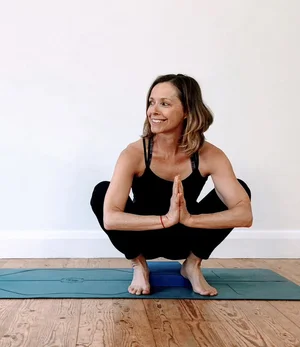
Improve your foot function and balance with yoga
For feet exercise videos scroll to the end!
Do you look at feet and think, “Wow! What beautifully intricate and incredible things my feet are! “
Maybe not, but perhaps you ought to because….
“The foot is a masterpiece of engineering and a work of art” Michaelangelo
Each foot has 33 joints and 26 bones to which enable it to make tiny shifts in movement and weightbearing so you can maintain balance. The feet and ankles are the master sensors of the body, containing about a third of our entire body's proprioceptive nerve sensors. They sense our position and the changing ground beneath us, transmitting that information at lightning speed up to the brain so that the whole body can be constantly responsive.
The effectiveness of the proprioceptors depends on how well all the tissues and joints in the feet and ankles can move, in order for the brain to be able to receive messages and act on them. When you have poor sensory awareness in your feet, if they are weak, stiff and narrow (shoes do this) the signals via the proprioceptors will be weaker, resulting in poorer balance, a stiffer body and less coordination and and ease in movement.
The effect of modern life on our feet
Our need to move well, critically including the feet and ankles, has decreased with modern life. We walk on flat even surfaces, sit on chairs much of the time, rather than integrating moves like squatting, kneeling, climbing, or jumping into our daily activities. Our feet are held much of the time in shoes with the toes locked in a narrow, uplifted position, the arch artificially immobile, the heel also lifted up restricting ankle movement. This even applies to comfortable shoes like trainers, and many flat sandals.
No wonder feet become stiff, weak, less responsive to the ground and unnaturally shaped. Some people end up with foot discomfort and pain which can frustratingly limit their ability to enjoy moving. Bunions, flat feet, squashed toes, hammertoes and plantar fasciitis are met with resignation, orthotics are commonplace. In our culture, the feet are very often an under-moved and unloved part of the body.
Further up the chain, stiff feet and ankles will create poor habits in how we stand, walk, move. Over time, this can negatively impact your balance, coordination and affect how much muscular tension you habitually hold, playing a part in low back pain, pelvic floor dysfunction, even neck pain.
I outline all this not to be negative, but to emphasise the long term value in doing movements which work on strength and mobility in your feet, ankles, knees and hips in both isolated and then connected ways. It’s a whole chain reaction!
This is why yoga classes with me include movements like rolling over your feet, toe spreading and lifting, calf raises on one leg and more. The movements might feel small, trivial even, but when you understand what the feet do, you can appreciate the value and quickly feel the positive changes.
How yoga and functional movement changes your feet and ankles
Improving movement in your toe joints, feet and ankles, and sensing into how everything is interconnected can have long term benefits. For example:
If you work on widening your toes more and strengthening your feet, your knees might be less likely to niggle when you run or hike.
Moving your feet more via mobility and strength exercises will bring more confidence in your everyday walking balance.
Stronger feet will make your pelvic floor muscles more responsive, and help your core muscles engage naturally.
How do you feel about your feet and balance? Are you ready to upgrade their movement potential?
Here are my top starter moves for getting your feet/ankles/calves moving more. They are all easy things to integrate into your everyday life. If you don’t like touching your feet, you don’t have to! There are lots of good exercises you can do. Start making your feet more responsive right now by piucking 2 minutes worth of moves to do everyday. Let me know how it goes!
Simple feet & ankle TLC
‘Shake hands’ with your feet daily - video below! You could also use some toe spreaders, toe-spaced socks, (for wider toes and forefoot, mobile toe joints).
Massage your feet and arches - after a walk or after a shower, or have a tennis ball in your kitchen to roll over the whole sole of your foot slowly (blood flow and feedback from arch muscles)
Roll over your feet, pressing into the tops of your feet and stretching out through your toes - table top pull backs are good for this, flipping the feet to top foot down and then toes under. (moving through the forefoot joints and stretching muscles)
Do 10 heel raises when you go up the stairs once a day - build up to single leg raises (ankle mobility and intrinsic foot strength).
Single big toe lifts, then four toe lifts with big toe down - you can do them sitting at your desk or in the shower... use your hand sto help as you need to start with.
Slow, deliberate ankle circles.
Walk barefoot in the park or garden when you can : )
Walk daily in ‘barefoot’ shoes - start with 10 minutes. Acclimatise to real foot movement gradually.
Here is a gentle starter movement practice for the feet and ankles
Shaking hands with the feet & other key toe stretches
This book, Simple Steps to Foot Pain Relief by Katy Bowman, is good resource if you have challenging issues with your feet. Or get in touch with me for some one-to-one support.
To learn more about healthy minimal shoes, have a read at Anya’s reviews here
Some UK barefoot shoe companies include - Groundies, Freet, Vivobarefoot. There are many more now!
an article comparing barefoot shoes
I recommend @thefootcollective for good foot info on you tube or Instagram. You can look up particular issues like bunions or fallen arches.